
As an illustrator and surface pattern designer, it’s easy to get caught up in the endless loop of sketching, refining, pitching, and waiting. Recently, I found myself in a different kind of loop: deep frustration with my own results. It wasn't that I was uninspired or lacking ideas—the vision was definitely there. But I was hitting that painful creative gap where my taste is simply better than my current skill level. What I was translating onto the screen or paper just wasn't matching the beautiful patterns I could see in my head. Seeking some grounding, I decided to re-read Elizabeth Gilbert’s Big Magic—and it was exactly what I needed. Re-visiting its pages felt less like reading a book and more like having a long, deeply honest conversation with a mentor who truly gets the creative struggle.
What struck me most wasn't just the uplifting encouragement, but the raw honesty. Gilbert doesn't sugarcoat the creative process. She talks openly about the things she’s had to let go of along the way. Let’s face it, life gets in the way. There are days when the inbox overflows, unexpected errands pop up, and the time we carved out for drawing a new floral motif completely vanishes. But the beautiful takeaway is this: you just keep going. You don't wait for the perfect, uninterrupted moment because it rarely exists. You simply keep creating in the margins of life.
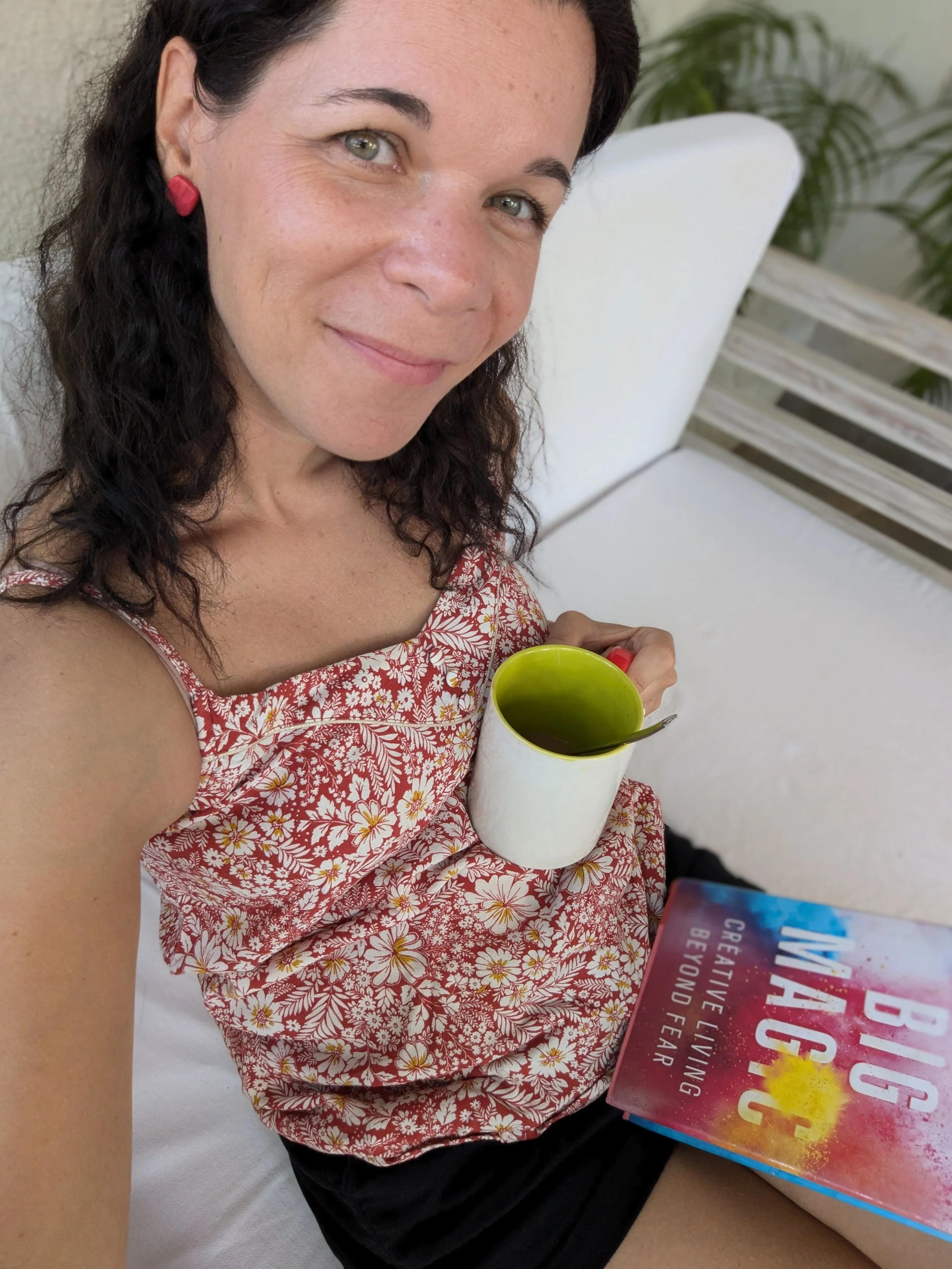
Another profound realization I had while reading is how we often hide behind the guise of "preparation." In the art and design world, it’s incredibly tempting to keep taking just one more course on color theory, learning one more software trick, or studying another illustrator's technique before we feel "ready" to share our work. But Big Magic gently reminds us that endless learning can actually be a sneaky form of perfectionism. At some point, we have to let go of the need to be flawlessly prepared. We have to stop consuming information and start actually making the art, trusting that we already know enough to begin.
Then there is the topic of rejection—a word every artist knows all too well. When you send out your portfolio or pitch a new pattern collection, hearing a "no" can feel like a direct hit to your soul. But the book offers a refreshing perspective that I really needed to hear: rejection is often not about you. More often than not, it’s simply about timing. Maybe an art director just bought a similar collection, or maybe the seasonal trend shifted. It doesn't mean your work isn't beautiful or worthy; it just means the stars haven't aligned for that particular piece yet.
But my absolute favorite part of the book comes at the very end. She introduces a concept that is entirely contradictory—and I believe it is 100 percent true.
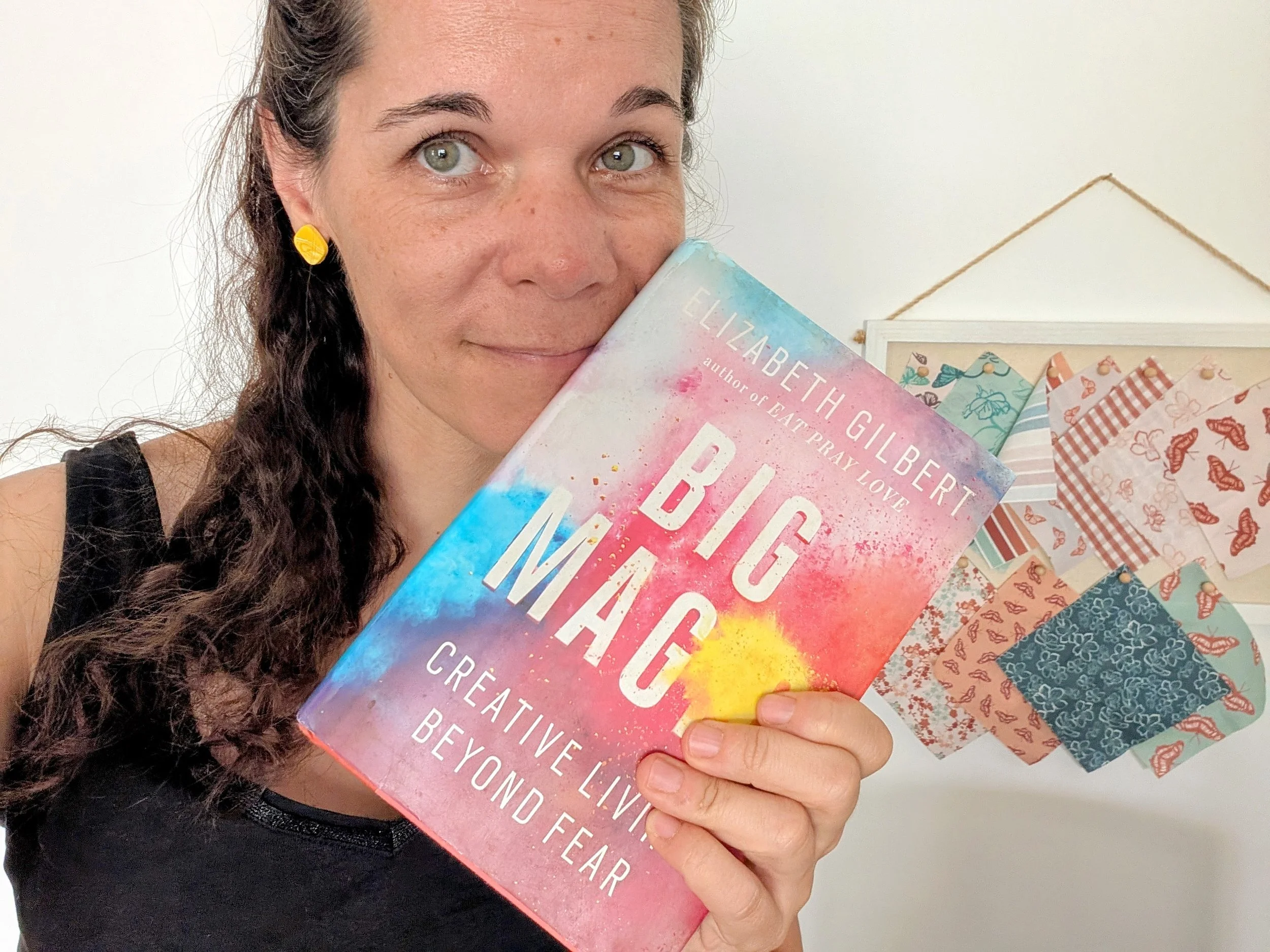
A creative journey can feel a bit lonely at times. You might question your skill and your path forward. This book helped me understand that these are normal feelings we all have. We just have to keep going. No matter what.
In the closing pages (and often shared right on the back cover), Gilbert discusses a paradox that every artist must embrace. The essence of her conclusion is this: Art is absolutely meaningless, yet it is also deeply meaningful. To survive as an artist and keep your sanity, you have to comfortably hold two mutually contradictory ideas in your head at once. Your creative expression must be the most important thing in the world to you so that you can actually create it, but it also must not matter at all so that you can let it go into the world.
You pour your heart into every brushstroke and color palette as if humanity depends on it, but when you're done, you have to be willing to release it completely.
It matters, and it doesn't matter.
As a pattern designer, this hit home for me. We have to build a massive amount of space in our heads for this exact paradox. We need to care fiercely about our craft, but hold the outcomes lightly. So, here is to building that space, going deep within it, letting go of perfectionism, and making absolutely whatever it is we want to make—even when our skills are still catching up to our taste.
If you haven't read Big Magic yet, I highly recommend it. It just might change the way you look at your own creative magic. It might make you feel lighter. To me, it made me feel like I am not alone and I am not crazy.
Happy reading,
Ana